Driven by passion for energy

The Team

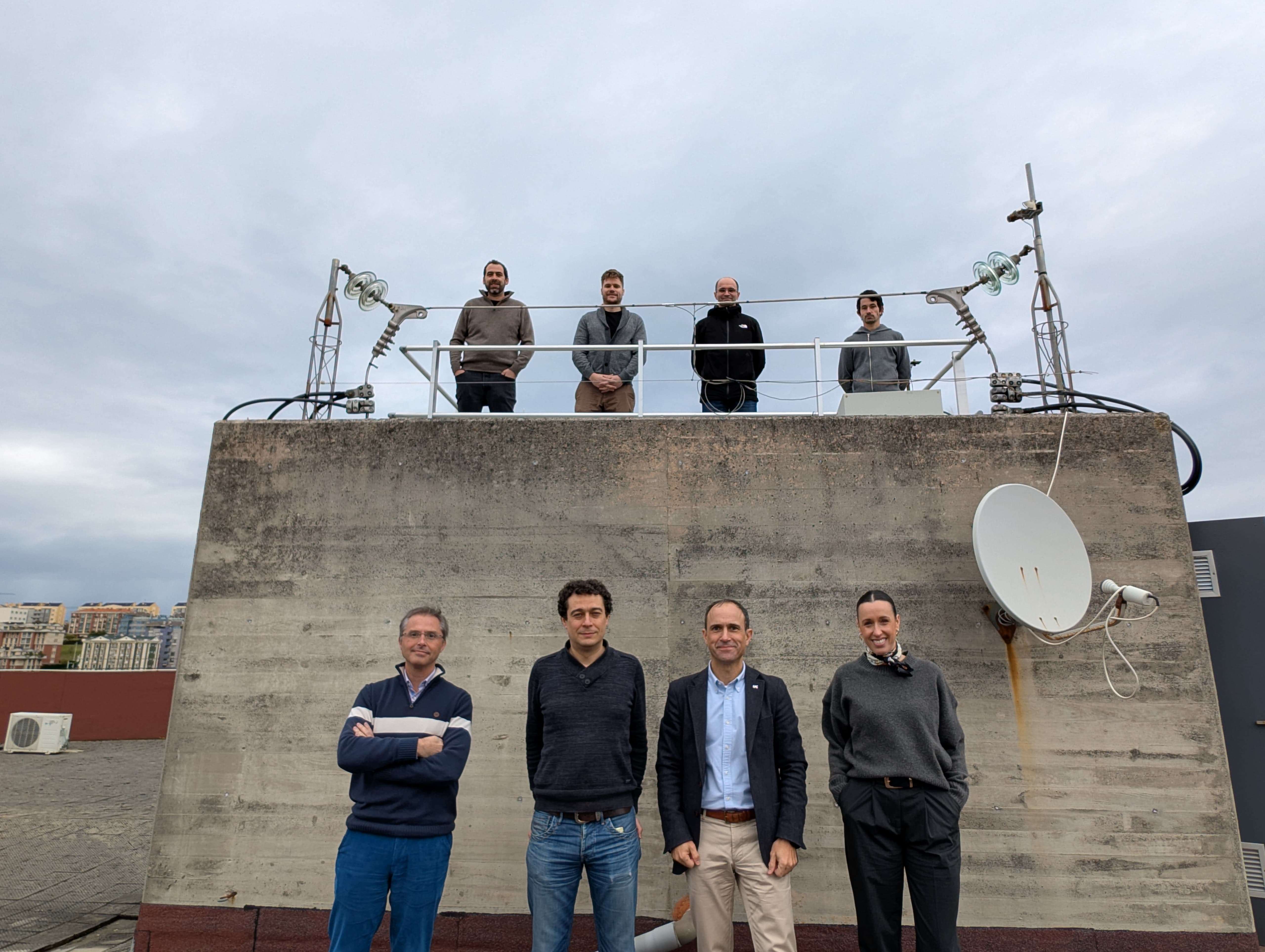
Here is where the soul of our team lives: a collective of energy-sustainability enthusiasts with a singular mission—to turn the ordinary into the extraordinary.

Each member contributes a unique spark, a fresh perspective that drives innovation and keeps mediocrity at bay.

Get ready to meet the minds behind the projects, the hands that shape the vision, and the hearts that beat to the rhythm of excellence.
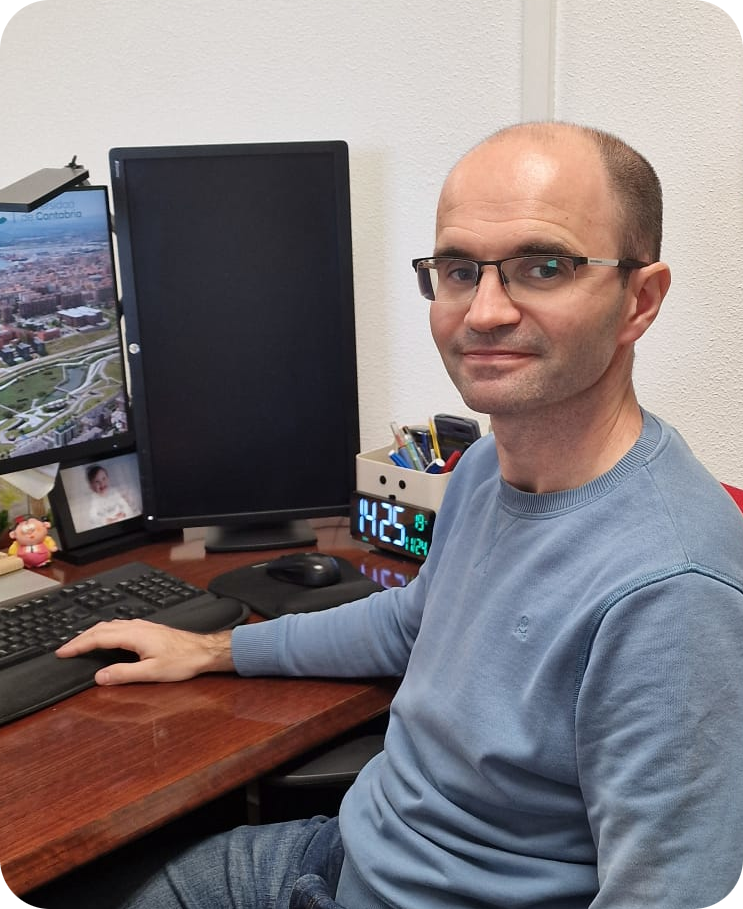
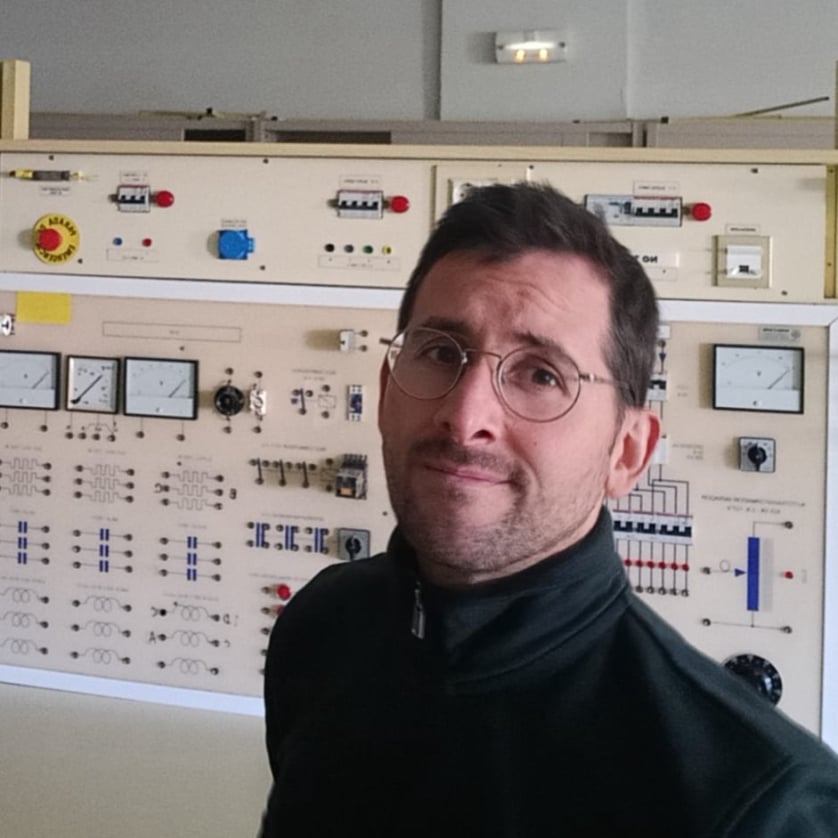
Meet our team (in alphabetical order)

Alberto Arroyo
Senior Lecturer of Electrical Engineering. He received the B.S. degree in industrial engineering from the University of Cantabria, Spain, in 2006 and the Ph.D. degrees in industrial engineering from the University of Cantabria, Spain, in 2012. From 2020 to the present, he is the head of the Department of Electrical and Energy Engineering, University of Cantabria (UC). He also works as a Researcher with the Department of Electrical and Energy Engineering in the Advanced Electro-Energetic Technology Group (GTEA). His research interests include power quality, energy efficiency, and grid-integration of renewable energies. He worked from 2007 to 2009 at Gamesa Electric S.A. as an electrical engineer and from 2006 to 2007 at E.N.S.A as a supply control engineer.

Pablo Benavente
Researcher and Ph.D. candidate who joined the group in mid-2025. He holds a Bachelor's degree in Industrial Technologies from the University of Seville (2020), where he specialized in Automation and Industrial Electronics. He later obtained his Master's in Industrial Engineering at the University of Cantabria (2023).
Before returning to academia, he gained international experience working on Renewable Energy projects in Colombia and Ireland. His research interests now lie at the intersection of Applied Mathematics and Electrical Engineering.

Sergio Bustamante

He received his B.Sc. in Energy Resources Engineering and his M.Sc. in Mining Engineering specialized in energy, from the University of Cantabria in 2014 and 2017, respectively. He earned his Ph.D. in Industrial Engineering from the same institution in 2022. From 2016 to 2024, he worked as a researcher. In 2024, he joined the University of Cantabria as a full-time professor in the Department of Electrical and Energy Engineering. He is a member of the Advanced Electro-Energetic Technology Group (GTEA). His research interests include the maintenance of electrical assets and the dynamic management of high- and medium-voltage underground cables.
Pablo Castro
PhD in Industrial Engineering (Energy), University of Valladolid. Specialist in high-temperature metrology and thermal modelling using computational fluid dynamics (CFD).
Professor in the Electrical and Energy Engineering Department (Thermal Engines area) at the University of Cantabria. Member of the Advanced Electro-Energy Technologies Research Group (GTEA), focusing on heat transfer, thermal metrology, renewable energy integration, and dynamic power line management. Collaborated with leading metrology institutes and contributed to SI kelvin redefinition. Author of three energy-related books; active in science communication and media.
Former Coordinator of the Energy Resources Engineering degree and Deputy Director for Infrastructure, Research, and Internationalization at the Polytechnic School of Mining and Energy Engineering; 8 years as International Relations Coordinator (Erasmus+ and Latin programs).

Alberto Laso
B.S. degree in Telecommunications Engineering from the University of Cantabria, Spain, in 2008 and M.Sc. and Ph.D. degrees in Industrial Engineering from the same university in 2015 and 2021, respectively.
He has been working at the Electrical and Energy Engineering Department of the University of Cantabria since 2013, first as a researcher and, after that, as teacher.
He is now a Permanent Lecturer in the field of Electrical Engineering. His main lines of research are oriented towards the quality of the electricity supply and the study of the problems associated with the grid-integration of renewable energies into the grid and wind energy. He is also a member of the Research Group in Advanced Electro-energetic Technology (GTEA) of the University of Cantabria.

Mario Mañana
Full Professor of Electrical Engineering. He received the B.S. degree in telecommunications engineering from the University of Alcalá, Spain, in 1992 and the M.Sc. and Ph.D. degrees in telecommunications engineering from the University of Cantabria, Spain, in 1995 and 2000, respectively. From 2005 to 2012, he has been the head of the Department of Electrical and Energy Engineering, University of Cantabria (UC). From 2012 to 2016, he was the Director of the Sustainability Office attached to the
vice-chancellor of Campus, Services, and Sustainability. From March 2016 to October 2024, he was Vice-Chancellor of Campus, Services, and Sustainability (UC). He also works as a Lecturer and Researcher with the Department of Electrical and Energy Engineering; he leads the Advanced Electro-Energetic Technology Group (GTEA) and from 2016 to 2019 the Viesgo Energy Chair. His research interests include power quality, energy efficiency, and grid-integration of renewable energies. He is Senior Member of the IEEE.
Raquel Martínez
Associate Professor of Electrical Engineering. She received the B.S. degree in industrial engineering in 2011, the M.S. degree in industrial engineering research in 2012, and the Ph.D. degree in industrial engineering in 2016, all from the University of Cantabria. From 2011 to 2019, she worked as a researcher, and in 2019, she joined the University of Cantabria as a full-time professor in the Department of Electrical and Energy Engineering. She currently serves as Deputy Director for Internationalization and Communication at the School of Mining and Energy Engineering. She is a member of the Advanced Electro-Energetic Technology Group (GTEA). Her research interests include energy efficiency, power quality, and, as her main line, the integration of renewable energies into electrical grids.
Eugenio Sáinz
Quantum mechanics underpins virtually every modern advance in electrical engineering, providing the microscopic framework from which our macroscopic circuit laws emerge. Semiconductor device operation—diodes, BJTs, MOSFETs—relies on quantum band theory, where carrier transport is governed by quantized energy states, band gaps, and Fermi–Dirac statistics rather than classical trajectories. Quantum tunneling dictates leakage currents, sets hard limits to device scaling, and is deliberately exploited in tunnel diodes, flash memories, and resonant tunneling structures. Superconductivity, a purely quantum-coherent phenomenon, enables lossless transmission, ultra-sensitive SQUID sensors, and forms the basis of many quantum bits used in quantum information processing. At the nanoscale, shot noise, quantum confinement, and discrete charge effects invalidate classical continuum models, forcing engineers to adopt non-equilibrium Green’s functions and quantum transport formalisms. Spintronics harnesses the electron’s spin degree of freedom—another intrinsically quantum property—to design non-volatile memories and logic with fundamentally new performance–energy trade-offs. Even metrology in electrical engineering is now quantum-anchored: the Josephson and quantum Hall effects define the volt and the ohm with unprecedented precision. 
Luis Vejo
Associate Professor with the Department of Electrical and Energy Engineering, University of Cantabria (UC). He received the Architect degree from the University of Valladolid, Spain, in 2012, the Mining Engineering and Energy Resources Engineering degrees from UC in 2015 and 2016, the M.S. degree in Mining and Energy Engineering in 2018, and the M.S. degree in Teacher Training in 2020 from the University of Cantabria (UC), Spain. He holds a Ph.D. in Industrial Engineering with a specialization in Electrical Engineering from UC.
From 2015 to 2022, he combined his academic progression with international professional work as an expatriate onsite engineer in large-scale infrastructure projects, including an hydropower plant in Guatemala or the Dubai metro line, as well as process engineering roles in the national industrial sector. Associate Professor at UC since 2022. Member of the Advanced Electro-Energetic Technology Group (GTEA) since beginning his doctoral studies in 2021. His research interests include energy efficiency, high-voltage transmission line optimization, and grid integration of renewable energy sources.


Contact our team

Ready to join the challenge? Let’s talk about how we can build knowledge and create value together, with energy sustainability as our guiding principle. Bring your talent to the team.